


Page 47 - IMCJ19s1
P. 47
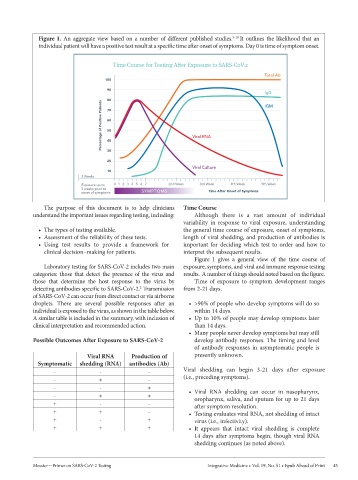
Figure 1.  An  aggregate  view  based  on  a  number  of  different  published  studies. 3-10  It  outlines  the  likelihood  that  an
              individual patient will have a positive test result at a specific time after onset of symptoms. Day 0 is time of symptom onset.


               The  purpose  of  this  document  is  to  help  clinicians   Time Course
            understand the important issues regarding testing, including:  Although  there  is  a  vast  amount  of  individual
                                                             variability  in  response  to  viral  exposure,  understanding
              •  The types of testing available.             the general time course of exposure, onset of symptoms,
              •  Assessment of the reliability of these tests.  length of viral shedding, and production of antibodies is
              •  Using  test  results  to  provide  a  framework  for   important  for  deciding  which  test  to  order  and  how  to
               clinical decision–making for patients.        interpret the subsequent results.
                                                                 Figure  1  gives  a  general  view  of  the  time  course  of
               Laboratory testing for SARS-CoV-2 includes two main   exposure, symptoms, and viral and immune response testing
            categories:  those  that  detect  the  presence  of  the  virus  and   results.  A number of things should noted based on the figure.
            those  that  determine  the  host  response  to  the  virus  by   Time  of  exposure  to  symptom  development  ranges
            detecting antibodies specific to SARS-CoV-2.  Transmission   from 2-21 days.
                                               2
            of SARS-CoV-2 can occur from direct contact or via airborne
            droplets.  There  are  several  possible  responses  after  an   •  >90% of people who develop symptoms will do so
            individual is exposed to the virus, as shown in the table below.   within 14 days.
            A similar table is included in the summary, with inclusion of   •  Up to 10% of people may develop symptoms later
            clinical interpretation and recommended action.      than 14 days.
                                                               •  Many people never develop symptoms but may still
            Possible Outcomes After Exposure to SARS-CoV-2       develop antibody responses. The timing and level
                                                                 of  antibody  responses  in  asymptomatic  people  is
                             Viral RNA      Production of        presently unknown.
             Symptomatic   shedding (RNA)  antibodies (Ab)
                   -              -              -           Viral  shedding  can  begin  3-21  days  after  exposure
                   -             +               -           (i.e., preceding symptoms).
                   -              -              +
                   -             +               +             •  Viral  RNA  shedding  can  occur  in  nasopharynx,
                                                                 oropharynx, saliva, and sputum for up to 21 days
                  +               -              -               after symptom resolution.
                  +              +               -             •  Testing evaluates viral RNA, not shedding of intact
                  +               -              +               virus (i.e., infectivity).
                  +              +               +             •  It  appears  that  intact  viral  shedding  is  complete
                                                                 14 days after symptoms begin, though viral RNA
                                                                 shedding continues (as noted above).


            Messier—Primer on SARS-CoV-2 Testing                     Integrative Medicine • Vol. 19, No. S1 • Epub Ahead of Print  45

